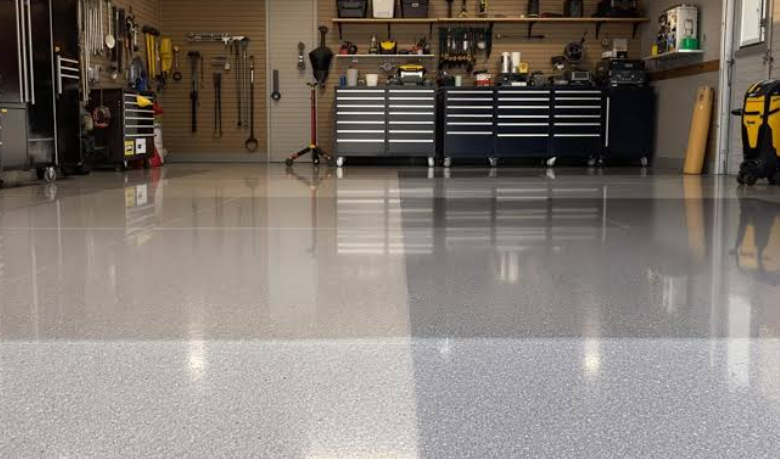
Concrete floors rarely fail overnight. Small warning signs usually show up first, and it is easy to ignore them since the damage often looks cosmetic at first glance.
This guide covers 7 signs that mean it is time to call floor coating contractors plus why waiting too long can turn a simple fix into a much bigger, more expensive repair.
Table of Contents
- 1. Visible Cracks in the Concrete
- 2. Stains That Will Not Clean Off
- 3. Dust That Keeps Coming Back
- 4. Peeling or Bubbling in an Existing Coating
- 5. Chipping or Flaking on the Surface
- 6. Damp Patches That Never Fully Dry
- 7. Hot Tire Marks or Rubber Staining
- Why Waiting Too Long Costs More
- What Happens When You Call a Contractor
1. Visible Cracks in the Concrete
Cracks are one of the earliest and most common warning signs. They form from temperature swings, shifting soil, or heavy loads pressing down on the slab over time. Once a crack appears, it lets moisture seep in, which can speed up damage underneath the surface.


2. Stains That Will Not Clean Off
Oil, grease, and chemical spills are common in garages and industrial spaces. If cleaning no longer improves the appearance of a stain, it likely means the concrete has become porous and is absorbing liquids rather than resisting them.
3. Dust That Keeps Coming Back
If your floor produces fine dust even after cleaning, this is called concrete dusting. It happens when the top layer of concrete or an existing coating begins to erode, releasing particles into the air and onto nearby surfaces.
4. Peeling or Bubbling in an Existing Coating
If you already have a coating and notice it lifting, bubbling, or peeling away from the concrete, this signals an adhesion failure. In busy spaces, lifted sections can even create a trip hazard, so this issue should not be ignored.
5. Chipping or Flaking on the Surface
Once concrete starts chipping or flaking at the surface, it usually means the slab underneath is weakening. This is often caused by scaling, where trapped moisture freezes and expands, breaking apart the top layer of concrete.
6. Damp Patches That Never Fully Dry
Persistent damp spots mean moisture is moving through the slab from below. Over time, this works against the concrete from the inside, weakening it well before visible cracks or stains appear on the surface.
7. Hot Tire Marks or Rubber Staining
If you notice permanent dark streaks where car tires sit, hot tires are transferring rubber directly into bare, unprotected concrete. A proper coating resists this type of marking and keeps the floor looking clean.
Why Waiting Too Long Costs More
Minor issues like small cracks or light staining are far cheaper to address early. Once damage reaches the point of deep cracking, structural cracking, or widespread coating failure, the repair often requires removing more material and doing more extensive prep work, which raises the total cost significantly.
- Early cracks: simple filling and resealing.
- Moderate scaling or dusting: resurfacing with a new coating.
- Severe structural cracking: grinding, patching, and full recoating.
- Widespread coating failure: complete removal and reinstallation.
What Happens When You Call a Contractor
A professional will inspect the floor, noting where cracks, stains, or wear are appearing. This helps determine whether the issue relates to moisture, traffic, chemical exposure, or a previous coating failure, so they can recommend the right fix rather than simply covering the problem with another layer.
Frequently Asked Questions
Are small cracks in concrete always a serious problem?
Not always, but even small cracks can let moisture in and worsen over time, so it’s worth having them evaluated before they grow into a bigger issue.
Why does my garage floor produce dust even after cleaning?
This is called concrete dusting, caused by the top layer of concrete or coating eroding over time. A new protective coating typically resolves this issue.
Can I just apply a new coating over a peeling one?
No, covering a failing coating usually leads to the same problem returning quickly. The old material typically needs to be removed and the surface properly prepared before recoating.
What causes permanent tire marks on a garage floor?
Hot tires can transfer rubber directly into bare concrete. A quality coating resists this kind of staining and keeps the floor looking clean over time.
How urgent is it to fix damp patches on a concrete floor?
Fairly urgent. Persistent moisture works against concrete from the inside and can accelerate deterioration, so it’s best addressed before cracks or coating failure appear.
See also: The Bilingual Speech Delay Myth: What the Research Actually Says
Conclusion
Cracks, stubborn stains, dust, and peeling coatings are your floor’s way of asking for help before the damage gets worse. Catching these signs early means a simpler, cheaper fix instead of a full replacement down the road.
If your concrete floor shows any of these 7 signs, it is worth calling floor coating contractors for an inspection sooner rather than later. Acting early protects both your floor and your budget.